

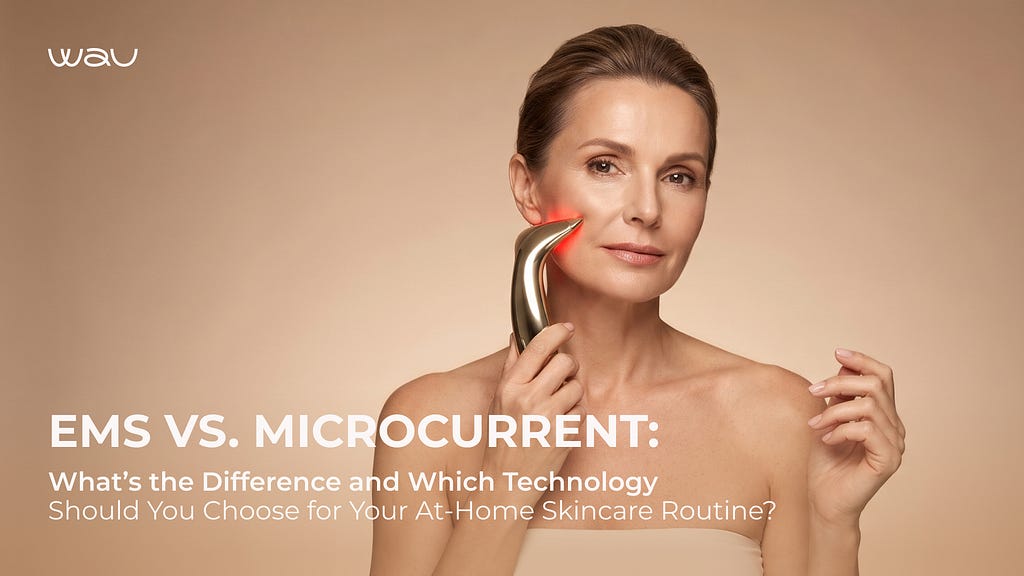
Beauty devices offer more ways than ever to bring professional-inspired technologies into your at-home skincare routine. Among the most popular are EMS and microcurrent. Both use electrical stimulation, but they differ in how they work and how they’re used in beauty treatments.
At WAU, we believe that understanding these technologies helps you make informed choices and find devices that fit your personal skincare needs. Let’s explore how EMS and microcurrent work, what sets them apart, and what to consider when choosing a beauty device.
What Is EMS?
EMS stands for Electrical Muscle Stimulation. This technology uses electrical impulses to stimulate muscles and trigger muscle contractions.
During a treatment, you may notice rhythmic muscle movements or feel small twitches. The sensations depend on the electrical parameters, intensity settings, and design of the device.
In beauty care, EMS is used in devices designed to stimulate muscles in areas such as the face and body, depending on the product’s intended use. These devices can complement massage treatments and at-home beauty routines.
Results vary depending on the device, frequency of use, and individual factors. An EMS massager should not be considered a guaranteed way to lift the face, eliminate wrinkles, or reshape facial or body contours.
What Is Microcurrent?
Microcurrent is a form of electrical stimulation used in aesthetic skincare. It uses specific electrical parameters associated with microcurrent technology, and the nature of the treatment depends on the device and its selected settings.
Microcurrent massagers are widely used in at-home facial care. Depending on the device, the treatment may produce different sensations, including noticeable muscle responses.
Microcurrent technology can complement your regular skincare routine with an additional device-based treatment. The intended cosmetic effects and visible results depend on the specific device and how it’s used, so it’s important to look beyond marketing claims and consider the product’s actual features.
EMS vs. Microcurrent: What’s the Difference?
The main difference between these technologies lies in their electrical characteristics and approach to stimulation.
EMS focuses on electrical muscle stimulation. Its impulses trigger muscle contractions, which may be visible and felt during a treatment.
Microcurrent uses a different form of electrical stimulation with parameters characteristic of microcurrent technology. The effects and sensations during a treatment depend on the particular device and its operating mode.
Rather than thinking of EMS and microcurrent as stronger and weaker versions of the same technology, it’s more accurate to understand them as two different approaches to electrical stimulation. Each device’s performance depends on its technical specifications and intended use.
Which Is Better: EMS or Microcurrent?
There’s no one-size-fits-all answer. The right choice depends on your goals and the features of the device.
If muscle stimulation is your priority, consider EMS devices designed for your intended treatment area. Before use, check whether the device is suitable for the face, neck, or body.
If you’re exploring device-based facial skincare, a microcurrent massager may be a useful addition to your beauty routine. Review its operating modes, the manufacturer’s recommendations, and the results you can realistically expect.
If versatility matters to you, compare individual devices by their intended use, available technologies, operating modes, and ease of use. Having more features doesn’t automatically mean a device will deliver better results.
Can You Use EMS and Microcurrent Together?
You shouldn’t automatically combine these technologies in the same session or use them simultaneously. Compatibility depends on the specific devices, their technical characteristics, and the manufacturers’ instructions.
If you use multiple beauty devices, follow the instructions for each one. Avoid performing consecutive treatments on the same area unless this is specifically permitted by the manufacturers.
If you have a pacemaker or another electronic implant, are pregnant, have a neurological condition, or have other medical concerns, check the device’s contraindications and consult a healthcare professional before use.
Do not use electrical beauty devices on broken or irritated skin. Stop the treatment if you experience pain, burning, or unusual discomfort.
What to Look for When Choosing an EMS or Microcurrent Massager
At WAU, we recommend looking beyond the technology name and considering the practical features of the device.
- Intended use: Check which areas the device is designed for, such as the face, neck, or body.
- Modes and intensity: Look at the available settings and whether you can adjust the intensity to a comfortable level.
- Instructions and contraindications: Make sure the usage guidelines and restrictions are clear.
- Skincare compatibility: Check whether a conductive gel is required and which skincare products are suitable for use with the device.
- Device care: Find out how to clean the massager and whether it can come into contact with water.
Avoid choosing a device based solely on promises of an instant lifting effect or complete wrinkle removal. At-home beauty devices can complement your skincare routine, but results aren’t guaranteed and may vary from person to person.
Which Technology Should You Choose?
EMS and microcurrent offer different approaches to electrical stimulation in at-home beauty care. To make an informed choice, consider your skincare goals, the device’s intended use, and the manufacturer’s recommendations.
At WAU, we believe modern technology can become part of an enjoyable self-care ritual — especially when you understand how your device works and choose one that suits your needs.


